


In this blog, you will find:
- Three silent API failures driving revenue loss, compliance risk, and innovation slowdown
- Why enterprises are prioritizing AI-ready API architectures
- The role of AI-driven APIs in creating supply chain visibility and agility
- Why modern API management is no longer an IT job but a C-suite priority
Outdated API infrastructure isn’t just technical debt. It costs revenue, compliance, and innovation.
A European bank triggers a PSD2 audit when an aging authentication API fails mid-transaction, freezing payments. A healthcare provider exposes patient records through an unpatched legacy API, landing HIPAA fines. These aren’t edge cases; they’re inevitable when API management isn’t a business priority.
Three failures drive this:
- AI overload: Legacy systems crumble under AI-driven workloads, costing sales.
- Compliance traps: One outdated API can trigger GDPR violations or lawsuits.
- Innovation slowdown: Teams waste weeks on bottlenecks while competitors ship faster.
Many enterprises still run on pre-AI stacks that are slow, siloed, and built for another era. The gap between API capabilities and business needs is widening.
This blog explores why modernizing API management must be a leadership priority.
Trends and Technologies Shaping API Management
API failures hit every industry, yet the API economy is exploding. The numbers speak for themselves:
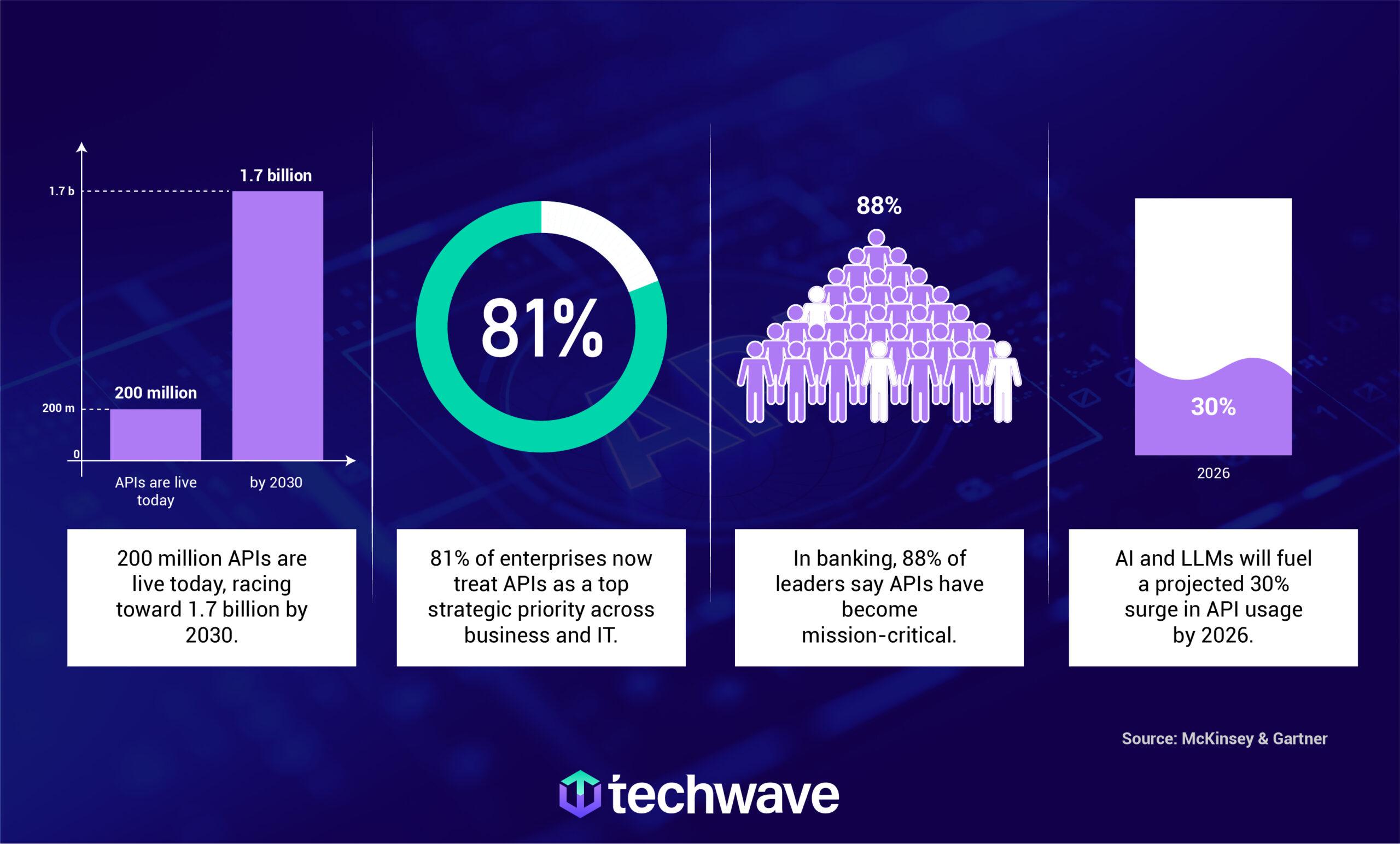
Modern API management prevents outages through resilience, powers growth with elastic infrastructure, and builds ecosystems that grow.
So here’s the leadership question: When your board asks why API management deserves C-suite attention today, will you show them the cost of prevention, or wait until they see the price of failure?
The answer lies in how today’s trends and technologies are reshaping the way APIs are built, managed, and scaled.
- Cloud-native & microservices ready: Banking is hypersensitive. A slight rate change can wipe out margins. A short outage can drive customers away. Growth hides cracks until customers start walking away.
That’s what happened to a leading bank whose open banking adoption plummeted. The culprit was creaky legacy SOAP/XML systems, forced to work with today’s fintech ecosystem.
65% of workloads will be cloud-ready by 2027, yet traditional API management can’t keep up with the scale and speed of microservices. This bank needed an architectural transformation: break the monolith into API-first services, deploy REST/GraphQL gateways, adopt Kubernetes, enable event streaming, and implement OAuth 2.0.
Customers notice the difference immediately. Balances update instantly, payments run flawlessly, and one-time linking replaces repeated logins. This restores trust, boosts retention, and readies the bank to scale at microservices speed.
- AI-powered intelligence ready: Only 29% of organizations are prepared for future supply chain demands. The rest lose revenue to inefficiencies and delays. Modern, AI-driven APIs deliver real-time visibility and agility.
By 2026, over 80% of enterprises will use Generative AI APIs, with 30% of new API demand driven by AI. APIs are no longer just connectors; they’re the intelligent link between AI and the business data.
Take manufacturers losing millions to outdated EDI and SOAP APIs that update inventory twice a day. By the time delays hit their ERP, production is already derailed. And their AI tools are useless without real-time data.
Modern REST and GraphQL APIs with event streams change that entirely. IoT sensor data flows directly into ERP and AI tools. Delays are flagged instantly, production reschedules automatically, and customers track live.
The impact: on-time delivery, lower supplier risk, and freed working capital.
- Enhanced API security: APIs are one of your biggest attack surfaces. 95% of breaches start with authenticated users, and 98% of attacks target APIs directly. Yet most enterprises operate in the dark, leading to undocumented shadow APIs, AI-powered exploits, and compliance risks that multiply as legacy tools miss the threats.
Imagine a global retailer’s checkout API is hit by credential stuffing during a flash sale. Without real-time detection, losses can hit millions!
AI-driven API security enforces zero trust, validating every request for trustworthiness, detecting anomalies in milliseconds, eliminating shadow API risks, and meeting GDPR/CCPA mandates.
- API-first development redefines API management: 75% of companies agree it is fundamental. It transforms API management from a post-build technical task into an essential business enabler from day one.
This new mindset treats APIs as strategic products, with dedicated life cycles and governance built in from the start. It reduces risks and accelerates time-to-market by enabling composable architectures and allowing teams to work in parallel.
What This Looks Like in Practice
When implemented correctly, AI-driven API management replaces manual fragmentation with seamless automation.
Problem: A European fintech leader faced rising user churn because manual subscription processes couldn’t reliably connect their app with banks, merchants, and users.
Intervention: Techwave deployed an AI-driven user lifecycle subscription solution that automates core operations across payments, authentication, and merchant integration.
Outcome: Subscription cancellations dropped 25% and users increased 20%.
Conclusion: The AI-driven API Future
Given that API-first architecture development has fundamentally redefined API management, it has become a strategic priority for leadership. Directly or indirectly, this approach can be tied back to AI advancements and integration. Hence, it makes sense to focus on AI-driven API frontiers.
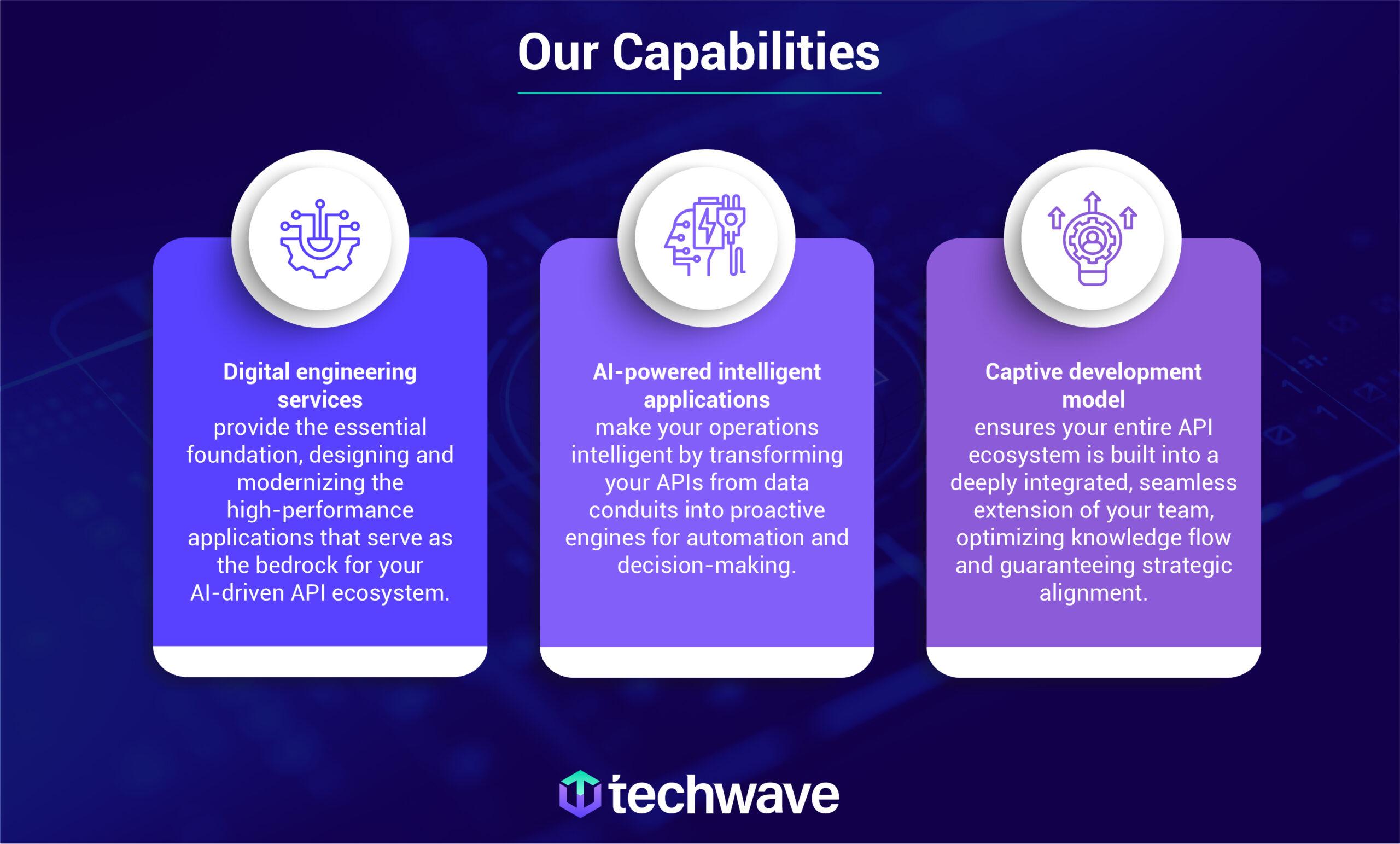
Is manual process fragmentation holding your business back? Bridge your API gap with a modern management strategy. Talk to our experts today!

Top 3 Questions Answered in This Blog
- What happens when legacy APIs fail under modern AI workloads?
- How do AI-driven APIs improve manufacturing supply chain resilience?
- Why does API management now require C-suite attention?
